Compounds synthesized in projects involve various biological activity data (such as IC50, EC50, enzyme inhibition activity, pharmacokinetic parameters, etc.). Traditional Excel management methods lead to incomplete data and chaotic versions, hindering global structure-activity relationship analysis and innovation.
Insights into Structure-Activity Relationships to Empower R&D Innovation
Substance & Sample Registration|Formulation Management|Big Data on Structure-Activity Relationships|Easy retrieval and analysis
Request a demoWhy use a compound and sample management system?
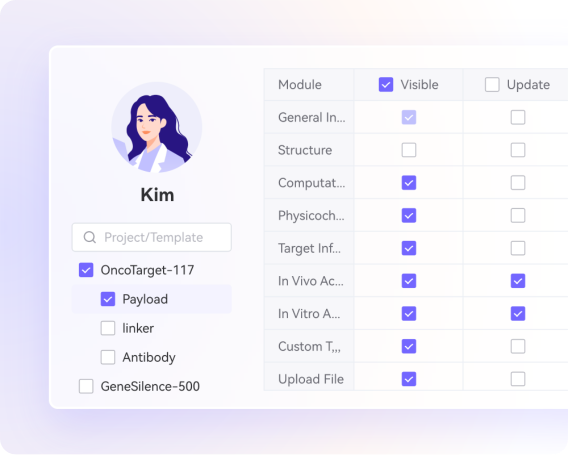
Sensitive information such as chemical structures, formulations, sequences, and physicochemical property data requires strict permission control. Excel cannot achieve granular permission management, posing leakage risks and impacting R&D security and compliance.
Previously synthesized compounds and developed formulations or sequences are difficult to query due to lack of unified data consolidation, often leading to duplicate research, resulting in dual waste of funds and time.
Sample management is chaotic, lacking a unified sample table; manual numbering makes it difficult to correlate with test data. Opaque sample status leads to expiration and invalidation, resulting in resource loss and inefficiency.
AtomDeep Registry vs traditional compound management
Traditional CMS
- The numbering pattern is fixed, with weak custom configuration capabilities, making it impossible to generate random numbers.
- Rigid registration templates and single registration type cannot meet the requirements for registering different types of substances simultaneously.
- A project can only be bound to a single template, making it difficult to adapt to complex interdisciplinary R&D scenarios and forcing project data to be fragmented.
- Coarse permission management fails to effectively control data access, posing a risk of data leakage.
- Data exists in isolation, cannot interoperate with ELN making it impossible to build a complete data link.
AtomDeep Registry
-
Powerful and flexible custom coding rules, supporting the generation of sequential/random serial numbers, meeting the complex numbering rules of multinational pharmaceutical companies such as GSK and Merck, with zero conflicts in global collaboration.
-
A flexible and configurable registration template that supports the registration of compounds, proteins, nucleic acids, formulations, etc. It allows customization of various fields to establish an exclusive database.
-
One project, multi-dimensional management. Seamlessly register and manage all substances, including small molecules, macromolecules, and formulations, under the same project, eliminating data silos.
-
Granular permission control mechanism, down to sensitive field-level access management, preventing core data leaks.
-
Achieve deep interoperability with the ELN system to establish end-to-end data integration for the entire sample workflow, encompassing registration, submission, testing, and data update, thereby creating a seamless R&D data flow.
Explore AtomDeep Registry features
Compound registration
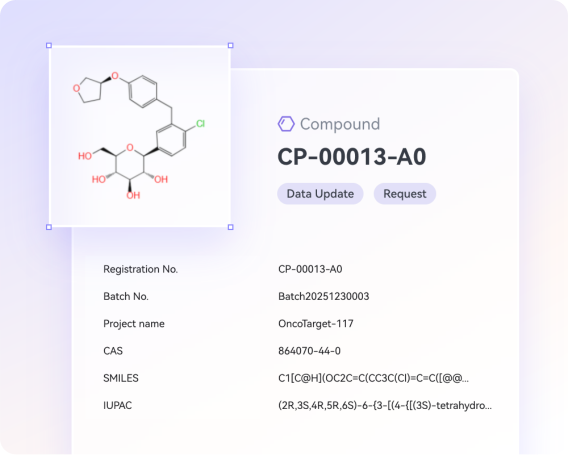
- Automatically calculates molecular weight, salted molecular weight, English IUPAC name, Chinese IUPAC name (globally exclusive), cLogP, and other computational chemistry data.
- Supports recognition and differentiation of chiral isomers, cis-trans isomers, axial chirality, various abbreviating groups, ferrocene structures, isotopes, etc.
- Supports batch registration and batch updates in various formats, such as Excel or SDF files
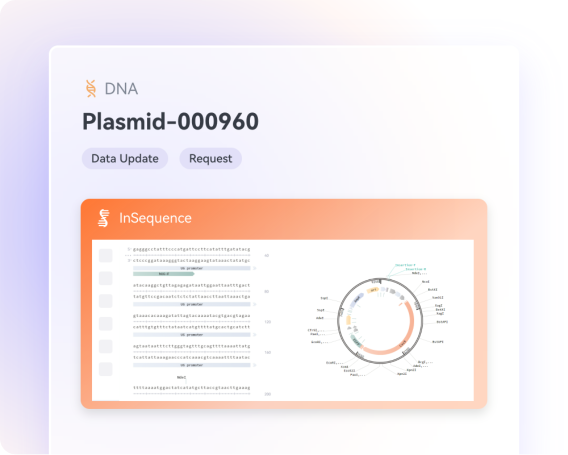
Registration of macromolecules such as DNA, RNA, peptide, and ADC
- Support the registration of monoclonal antibodies, bispecific antibodies, and polyclonal antibodies
- Automatically calculate the molecular weight, isoelectric point, extinction coefficient, etc. of peptides
- Visually view and edit annotation information such as features and primers of DNA/RNA sequences
- Supporting ADC registration
Formulation registration
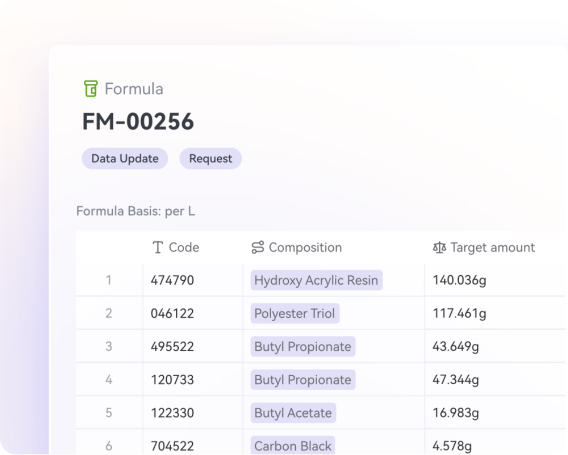
- Support the establishment of a unified raw material information database as the data source for formulation ingredients.
- Allow hiding of confidential ingredients in formulations, providing flexible and granular data permission control.
- Perform multidimensional screening and searching based on raw material usage, physical property range, and project labels to accurately identify the target formulation.
Data aggregation and retrieval
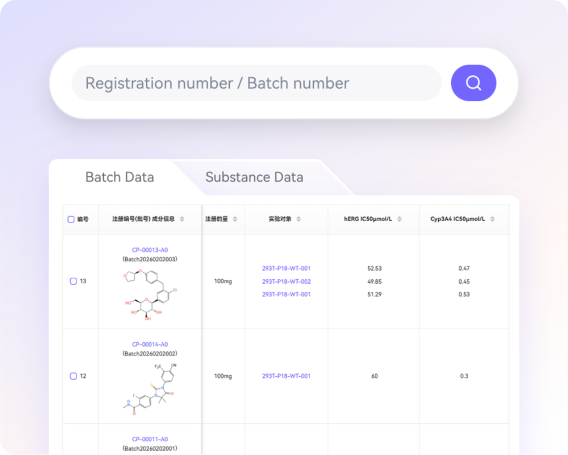
- Display molecular structures, sequences, test data, and images in a list format with filtering and sorting options for SAR analysis.
- Automatically aggregate multi-batch information for the same substance and supports various value selections such as average value.
- Supports full-text, exact, and substructure searches, as well as batch scanning and other search methods.
- Supports exporting all data to Excel or SDF files
Sample full lifecycle management
- Centralized display of all sample information in the Sample Center, supporting custom fields to meet personalized needs and helping enterprises build their proprietary sample library.
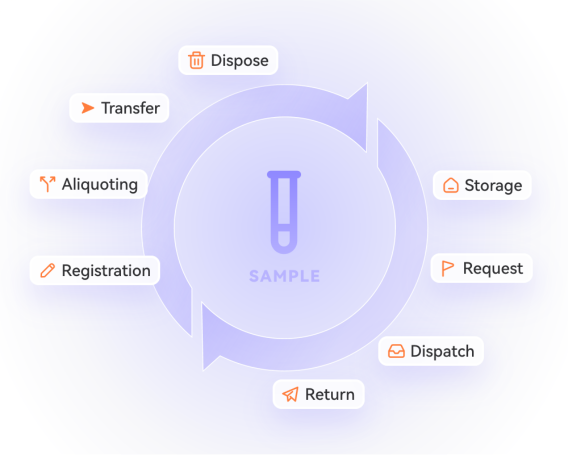
- Supporting the entire process management of samples, including storage, request, return, aliquoting, location modification, discarding, etc.
- Supporting 96-well plate requests, automatic calculation for solution preparation, solution preparation operation procedures, and gradient dilution, benchmarking against the internationally renowned Mosaic sample management system.
- Real-time recording and operational traceability to ensure compliance throughout the entire sample management process.
Visualized storage management
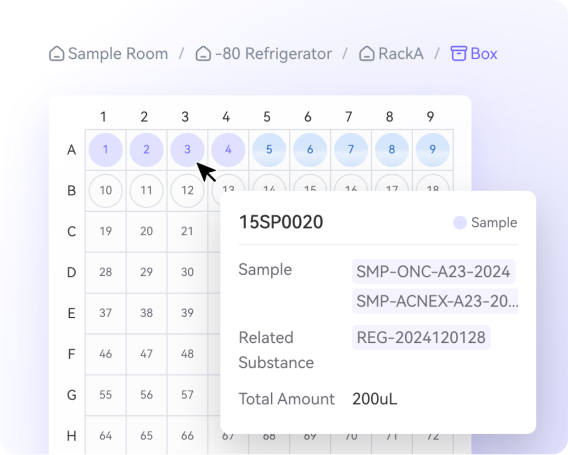
- Supporting transnational and cross-regional sample storage management, and supporting the management of various types of storage locations such as refrigerators, shelves, sample tubes, EP tubes, 96/384 well plates, etc.
- Supporting customizable location hierarchies, a visual interface, and flexible configuration of viewing and usage permissions.
Refined data isolation design + group management adaptation
- Data isolation: Supporting triple-level isolation (field/project/business group), enabling sensitive data (e.g., structures, activity data) to be hidden, balancing independent operations of subsidiaries with compliance and confidentiality.
- Group adaptation: Unifying data standards and personalized configurations go hand in hand, supporting cross-regional warehouse visualization management and control. It can share public data, isolate core assets, and also connect with the group's existing systems, adapting to multi-level collaboration and large-scale expansion.
Why teams choose AtomDeep
Designed by Scientists, understanding scientists better, one-stop deep empowerment
Modern operation interface and international user interaction design, enabling even beginners to quickly master usage, aligning with scientists' common sense and habits.
Project initiation, experimental design, experimental records, substance registration, sample registration, sample application, test task assignment, test data aggregation, structure-activity analysis + AI, etc., covering the entire process of innovative research and development
No-code platform, realizing personalized needs through configuration.
Buildsing custom registration templates for multiple registration types, supporting registration management of compounds, biological sequences, formulation BOMs, etc., meeting personalized needs across different industry backgrounds.
Fields such as templates and samples support customization, enabling personalized needs to be met without code modification. Continuously iterated and upgraded to meet evolving customer needs over time and personnel changes.
Covering the entire laboratory R&D process, empowering the discovery of new drugs and materials.
Covering the entire innovative R&D process, including project initiation, experimental design, material procurement and inventory management, experiment recording, substance registration, sample logging, sample requesting, test task assignment, test data aggregation, SAR analysis + AI, etc.
Independently developed, driven by cutting-edge technology
Integrating independently developed InDraw and InSequence, benchmarking against ChemDraw and SnapGene respectively, featuring powerful standalone clients with international influence.
Supporting registration of complex and diverse structures, such as HELM, various isomers, ferrocene, R-groups, various functional groups, isotopes, ADCs, antibody nucleic acid sequences, etc.
Breaking down data silos, achieving integrated flow
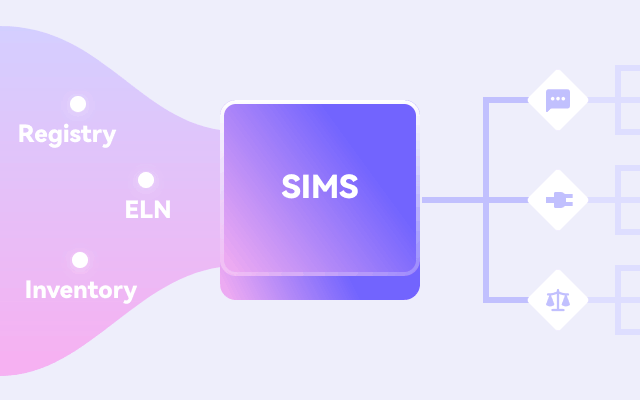
Interfaces with internal AtomDeep systems such as ELN and Inventory, ensuring seamless internal data flow.
Empower your innovation with SAR big data and AI
Frequently asked questions
1). R&D Exploration Stage
Registration & Sample Storage
From initial synthesis, assign a unique identifier to compounds, antibodies, nucleic acids, formulations, and other substances. Capture core metadata including chemical structure and source information, manage physical samples, and start the centralized aggregation of all activity-related data.
Sample Request & Transfer Management
Track sample requests and transfers via the system, with online assignment of testing tasks. This ensures samples are easily locatable, their workflows fully transparent, and their usage fully traceable.
R&D Test Data Aggregation
Over the entire R&D lifecycle, diverse test data—including spectra, activity results, and stability records—and associated files such as images and documents can be uploaded, linked, and accessed at any time, enabling unified, centralized data management.
2). R&D Optimization Stage
Result Analysis and Decision Support Leverage continuously accumulated data to enable multi-dimensional comparison and evaluation of compound-related information, supporting informed decisions on whether a compound merits further in-depth research or structural optimization.Summary.In short, the system can be adopted immediately upon the synthesis of new substances—including compounds, antibodies, cells, nucleic acids, and ligands—during R&D. It accompanies each substance across its entire research lifecycle, enabling structured data management, evidence-based scientific decision-making, and full end-to-end traceability.
AtomDeep Inventory (Warehouse Material Management System) focuses on the inbound and outbound management of externally purchased materials such as reagents and consumables. It supports material reuse, cost control, and complete lifecycle management of laboratory supplies.
“CROs may only perform compound registration, but cannot view analytical test data.”
The core logic and operation are as follows:
Permission Isolation Configuration
Administrators can customize role permissions for CRO users, granting access only to the compound registration module (e.g., structure entry, basic property input, and identifier assignment), while hiding all fields related to analytical test data (such as IC50, purity, and spectrum-associated data).
Process Compliance & Security
All CRO operations are logged and fully traceable, meeting cross-organization collaboration requirements while ensuring the security of core structure-activity data."
1). Administrators customize the biology department's role permissions, granting only "test data entry/upload" permissions (e.g., editing rights for data fields like IC50, purity).
2). Set "hidden" permissions for sensitive fields like "compound structure" and "sequence." Accounts for biology department personnel cannot view these fields after login.
3). Uploaded data is automatically associated with the compound number. Authorized R&D personnel can view the complete data (structure + test results). The biology department can only manage the test data they upload. Operations are logged for traceability, ensuring data security.
1). Hierarchies are freely adjustable: Supports multi-level configuration from ""Warehouse → Area → Shelf → Freezer → Storage Box → Well Plate → Sample Tube"" and can also be simplified to fewer levels like ""Freezer → Sample Tube"".
2). Adapts to various storage carriers: Including conventional shelves, ultra-low temperature freezers, liquid nitrogen tanks, 96/384-well plates, EP tubes, etc. A visual interface intuitively displays the hierarchical relationships.
3). Supports cross-border/regional warehouse management: Samples in different regions can have independent hierarchical systems with tiered permission control, meeting the needs of multi-location R&D scenarios.
1). Direct Registration Entry: The system has a built-in independent registration module. Information can be entered manually, or compounds/proteins/nucleic acids can be directly drawn/edited using the built-in InDraw Office or InSequence biological sequence editor and then submitted for registration, without switching to third-party tools.
2). Batch and Quick Registration: Supports batch import of experimental data (e.g., Excel tables, SDF files) to complete the registration of multiple substances. Information for newly synthesized substances can also be quickly populated by copying historical registration templates, improving operational efficiency.
3). Integration with Experimental Records: Can directly and automatically synchronize compound, protein, and nucleic acid data (including structures, sequences, synthesis processes, etc.) generated in experiments from the InELN electronic lab notebook, completing registration automatically and avoiding duplicate entry.
4). Multi-type Adaptability: Adapts to various substances including small molecule compounds (including chiral/geometric isomers), peptides, DNA/RNA, antibodies, etc. Key parameters like molecular weight and isoelectric point are automatically calculated during registration, and a unique number is generated.
Two Registration Modes Supported
The system supports two workflows: registration after solution preparation and sample creation (content‑based registration), or pre‑tube preparation and sampling followed by registration (sample tube–based registration), adapting to diverse experimental processes.
Flexible & Convenient Operation
Sample information such as concentration, batch number, and storage conditions can be entered manually or imported in batches via Excel or SDF files. Samples generated from experiments can also be automatically registered with one click directly from the AtomDeep ELN electronic lab notebook.
Automatic Core Information Association
A unique identifier is automatically assigned upon registration and linked to the structure, synthesis process, and other data of the corresponding compound or biological sequence. Custom sample fields (e.g., cell passage number, subject information) are also supported to meet evolving R&D requirements across disciplines.
1). Provides standardized templates for direct filling and uploading of Excel/CSV data, supporting custom field mapping.
2). Data can be exported from legacy systems and then imported into AtomDeep Registry.
1).Whole Tube RequestRequest an entire sample tube directly, ideal for scenarios requiring the original sample state to be preserved. Tube ID, remaining quantity, and other details are automatically recorded after the request.
2)Request by QuantityRetrieve a precise amount by mass (e.g., mg) or volume (e.g., mL). The system automatically updates remaining inventory to support micro‑scale and quantitative experiments.
3)Solution PreparationPrepare solutions at specified concentrations on demand. The system automates solution calculations to eliminate manual errors, while recording solvent, concentration, preparer, and other key information.
4). Gradient DilutionSupports gradient dilution for 96/384‑well plates, automatically generating dilution schemes and concentration gradient tables—perfect for high‑throughput screening. Furthermore, unused portions of requested samples can be returned, with inventory status updated in real time, forming a closed‑loop traceable process:
1). Flexible Template Configuration: Administrators can create multiple custom templates within a single project, matching the data registration fields for different substances like small molecule compounds, antibodies, cells, DNA/RNA (e.g., small molecule templates include structure and molecular weight fields; antibody templates include sequence and isoelectric point fields).
2). Collaborative Management of Multi-type Data: Different types of substances are registered independently via corresponding templates, but the data is centrally attributed to the same project. Supports filtering and viewing by template category, ensuring clear data classification while enabling data collaboration at the project level.
3). Template Reuse and Version Management: Created templates can be reused across projects and can also be modified and optimized within a project, retaining version records to adapt to dynamic adjustments in data registration needs during the R&D process.
1). Full-process Logging: Every operation, including sample registration, information modification, request, aliquoting, and discarding, automatically records details such as the operator, time, and content changes (e.g., structure modification, concentration adjustment). These records are tamper-proof.
2). Audit Trail Support: A complete built-in audit trail function allows exporting operation logs, clearly presenting the entire data lifecycle flow trajectory, complying with FDA 21 CFR Part 11 and NMPA electronic record regulations.
3). Version History Traceability: Historical versions are retained after data modification. Version comparison is supported, clarifying the specific content of each change, ensuring there is ""evidence to check"" during compliance audits.
Encrypted On-Premise DeploymentSupports integration with local encryption software, with all data stored on the enterprise’s internal servers for physical network isolation. It also provides tiered permission control and operation logging to strictly prevent internal data leakage.
Certified Secure Cloud DeploymentComplies with ISO 27001 information security standards. Data transmission and storage are protected by HTTPS encryption, strict firewall policies, and a secure Linux operating system, ensuring end‑to‑end data encryption.
Full-Scenario Security ControlsSupports multi‑factor authentication (MFA), IP access restrictions, and multiple data backup strategies, meeting the confidentiality and compliance requirements of R&D data.
1). Supports Structure Search: Allows direct drawing or uploading of chemical structures to precisely match target samples (including derivatives with the same core), solving the problem when names/CAS numbers are unavailable for searching.
2). Multi-dimensional Filtering: Supports combined filtering by molecular weight, activity data (e.g., IC50), batch, storage conditions, custom fields, and more. Also supports sorting to quickly narrow down the search scope.
3). Full-text and Tag Search: Supports full-text search for sample names, numbers, notes, etc. Samples can be tagged (e.g., ""Candidate Compound,"" ""Clinical Sample"") for quick categorization and search by tag.
4). Visualized Location Mapping: Directly locate the physical storage position of a sample through the visual hierarchy of ""Warehouse → Freezer → Storage Box.
Generating SAR Tables:
Correlating Structure-Activity Data: The system can bind compound structures (including small molecule, large molecule sequences) with biological activity data (e.g., IC50, EC50, purity, DAR value).
Multi-dimensional Data Integration: Supports incorporating physicochemical parameters like molecular weight, Lipinski\'s Rule of Five, isoelectric point, as well as information like synthesis routes and spectrum verification results, forming a complete SAR table.
Core Value in Aiding R&D Screening:
AtomDeep Registry ensures secure data storage through multi-layered protection, fully satisfying security requirements for both on‑premise and cloud deployments.
Encrypted On-Premise Deployment
Support integration with local encryption software, with all data stored on the enterprise’s internal servers for physical network isolation. It also provides tiered permission control and operation logging to strictly prevent internal data leakage.
Certified Secure Cloud Deployment
Comply with ISO 27001 information security standards. Data transmission and storage are protected by HTTPS encryption, strict firewall policies, and a secure Linux operating system, ensuring end‑to‑end data encryption.
Full-Scenario Security Controls
Supports multi‑factor authentication (MFA), IP access restrictions, and multiple data backup strategies, meeting the confidentiality and compliance requirements of R&D data.
Data Sources and Integration Support:
Internal Data Integration: Can directly integrate compound structures and sample test data registered in AtomDeep Registry, as well as experimental activity results from the AtomDeep ELN, eliminating duplicate entry.
Compatible External Data Import: Supports importing external compound structures and activity data via formats like SDF and Excel to integrate into a unified SAR table.
Real-time Updates and Iteration: When new compounds are registered or activity test data is supplemented, the SAR table can be automatically updated, ensuring R&D personnel always have the latest correlation analysis results.
Videos
1). Registration of Different Types (Small Molecules, Large Molecules, etc.)
2). Sample Management (Aliquoting, Gradient Dilution, Storage, etc.)
3). Location Visualization (Viewing Samples in Locations, Managing Locations)